

When you search for Iceland in either Google or Pintrest one of the first images you will get is of someone diving in the clear blue waters of Silfra. This is the place where the North-American and Eurasian tectonic plates pull apart at a rate of two centimetres per year. This has been a bucket-list item of mine, even before I learnt how to dive. In order to do the dive at Silfra, one must have a dry suit certification. I didn’t so I opted for a package where you take the dry suit course one day and dive at Silfra the next day.
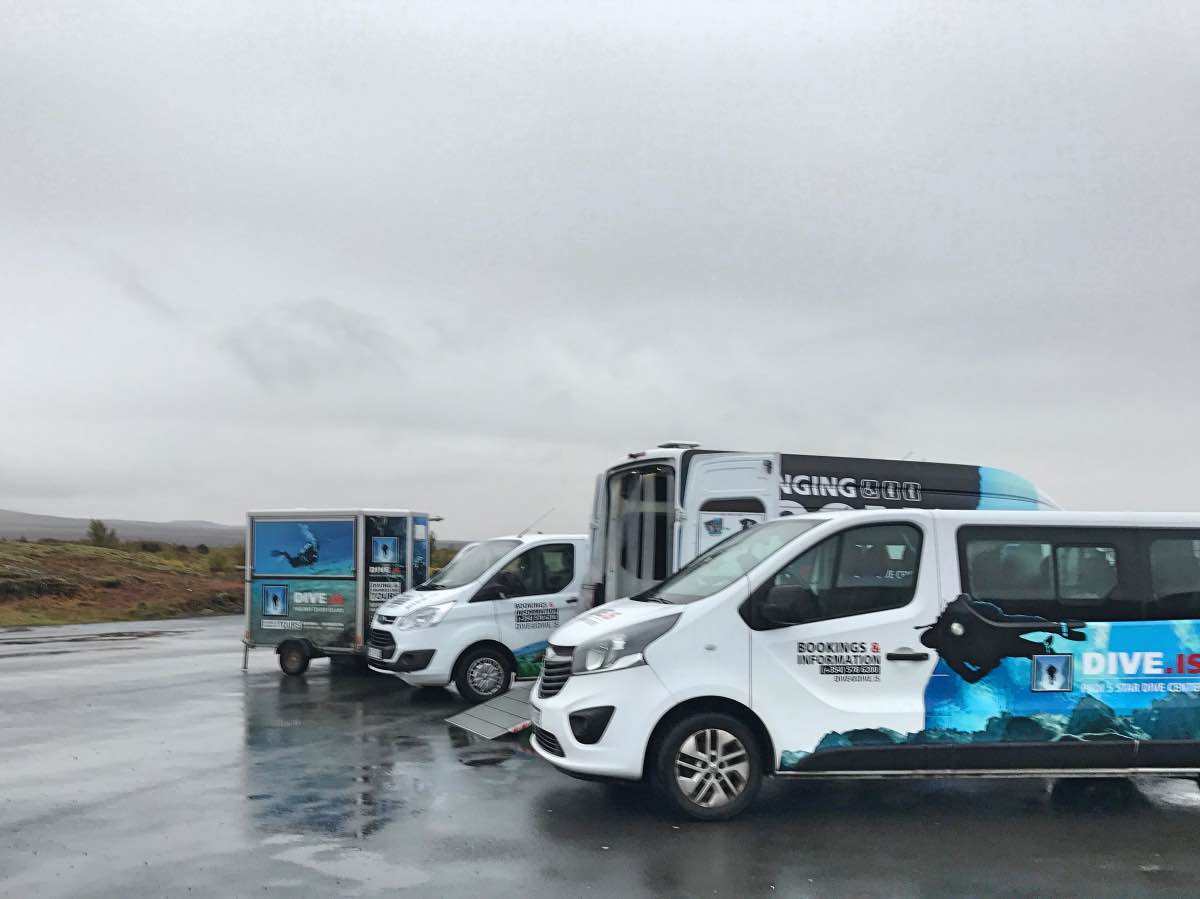
Dive centre buses at the parking lot
For my dry suit course my instructor picked me up, and drove to the local swimming pool. There I was shown all the equipment, and taught the difference from a wet suit and how to assemble everything. After putting on all the gear, which was not an easy task, we headed to the showers to rinse off the gear – which must have looked so strange to everyone else. Getting in the water was such a strange feeling, and using the suit itself to control buoyancy was completely different. I had to demonstrate some skills, and then we swam around for a bit so that I could get used to the suit. After a theory quiz and some food we headed out into the Islandic nature to do two more dives.
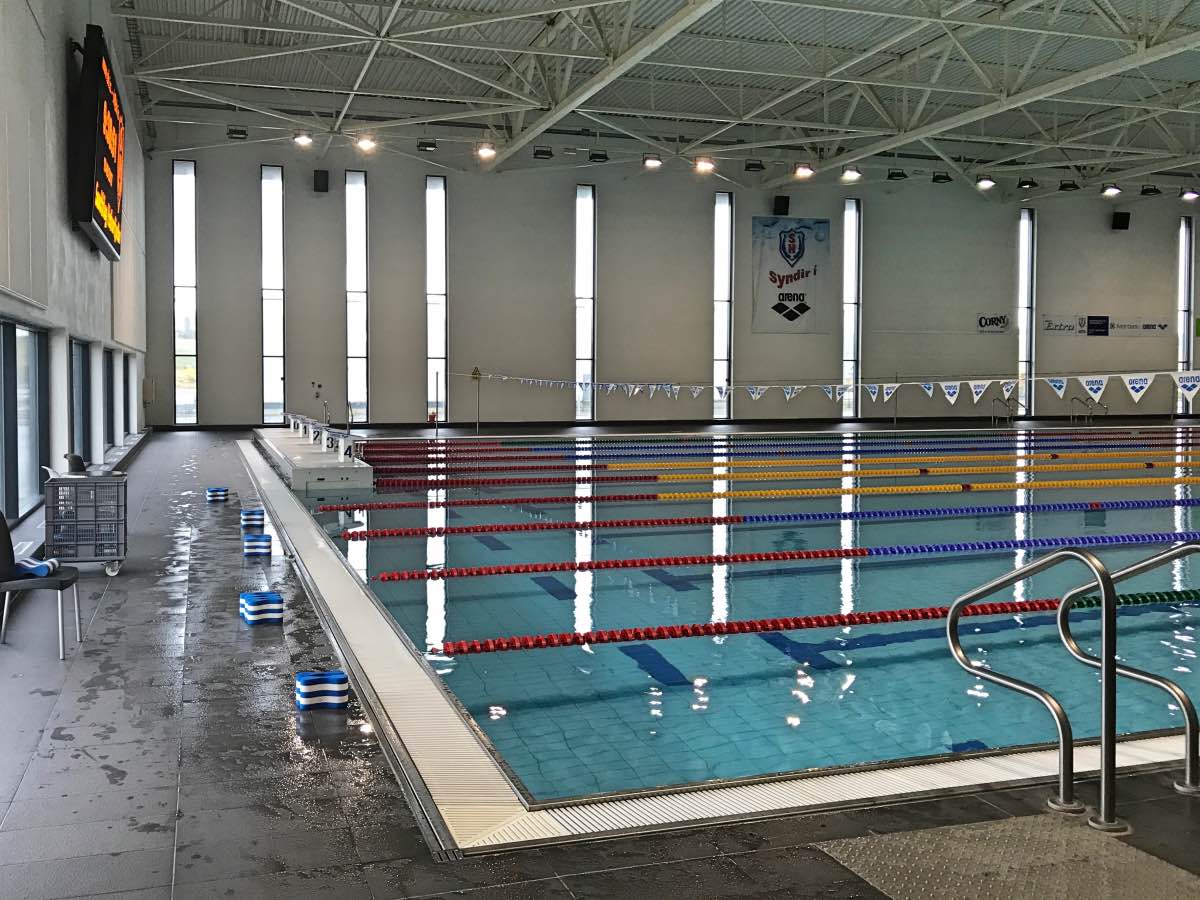
Dry suit pool practise
The first dive site was at Kleifarvatn, a relatively big lake outside Reykjavik surrounded by beautiful mountains. There is even a black gravel beach on the lake shore. The water held about 10 degrees so it was not super cold and again we did tested some skills and swam around for a bit. Except for a few shrimp and some grass, there was not much to see in the lake. When we got out of the water there were some other tourists taking pictures and found it strange to see divers coming out of the water. After packing away the gear we warmed up with some hot chocolate and cookies before heading to the next dive spot.
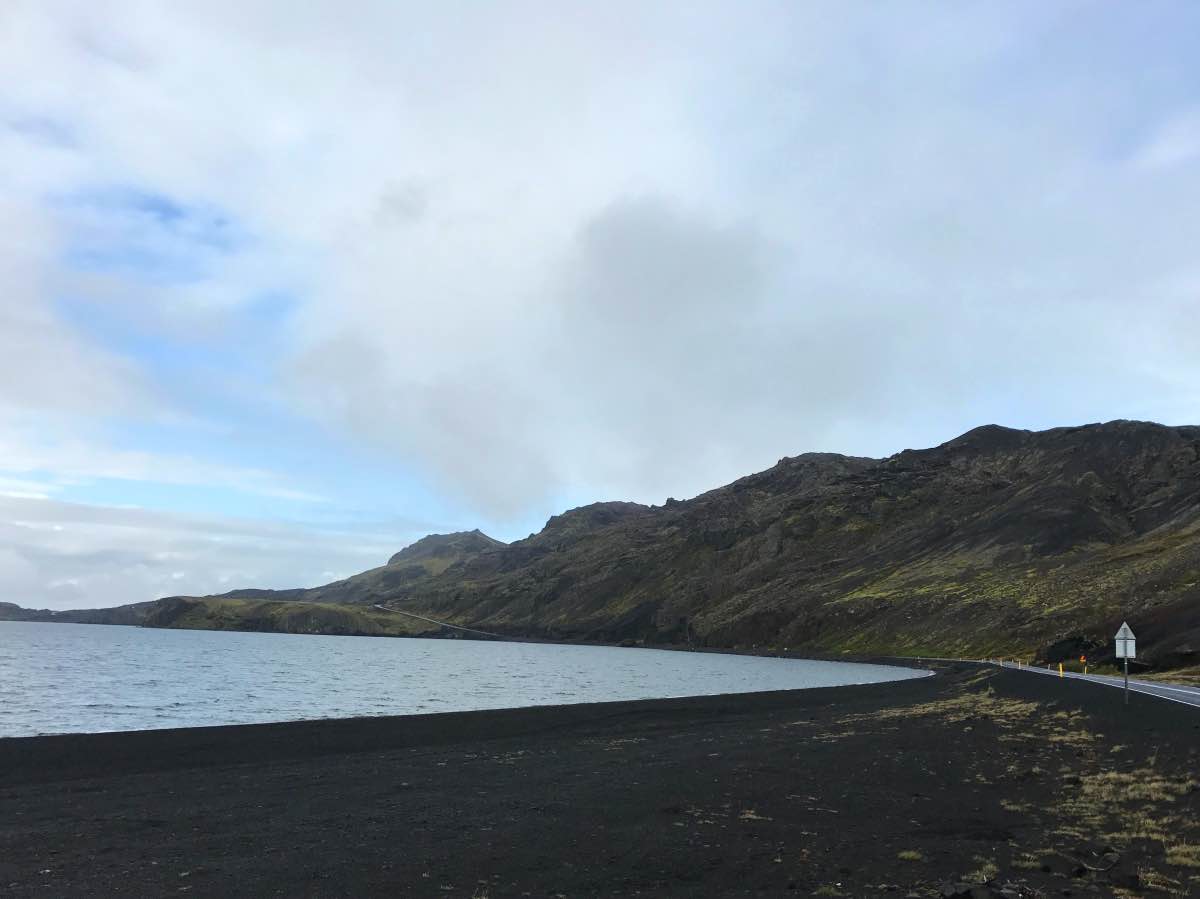
Kleifarvatn, Iceland
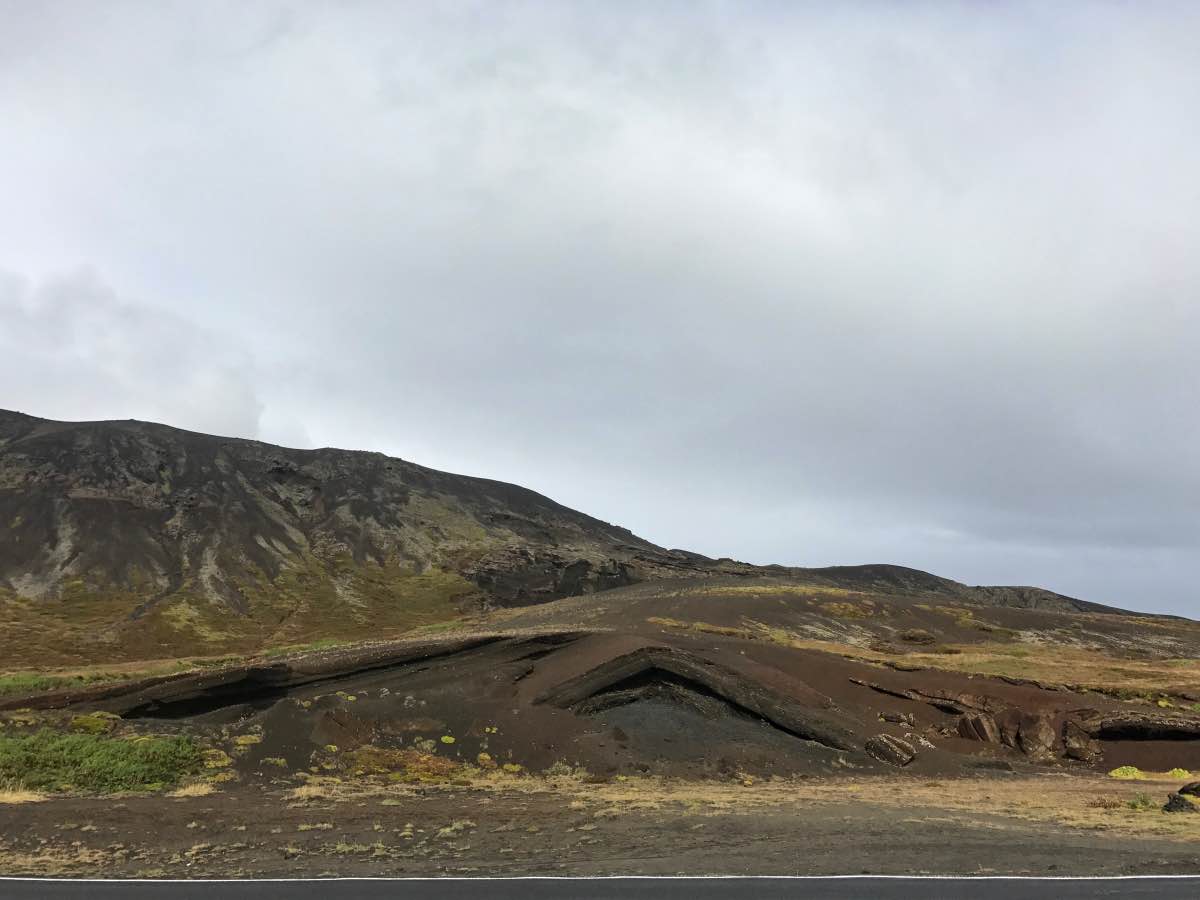
Iceland – Interesting mountains formations
For the next dive my instructor picked Bjarnargja, a site that was new to her as well. On the way there, we stopped at a place where boiling hot water bubbled out of the ground. When we arrived at Bjarnargja it was literally two abandoned buildings and a crack with water that was maybe 15 meters long, and you could hear the ocean in the distance. In order to get into the water we had to take a giant stride in from a rock. Once in the water, we went 17 meters down more or less to the bottom and swam back and forth a few times as we ascended. At the bottom there was the prettiest purple anemone! The walls were covered in algae, and just moving around in the water stirred it all up decreasing the visibility. In order to get out of the water we had to swim up to these algae covered rocks and kind of climb out.
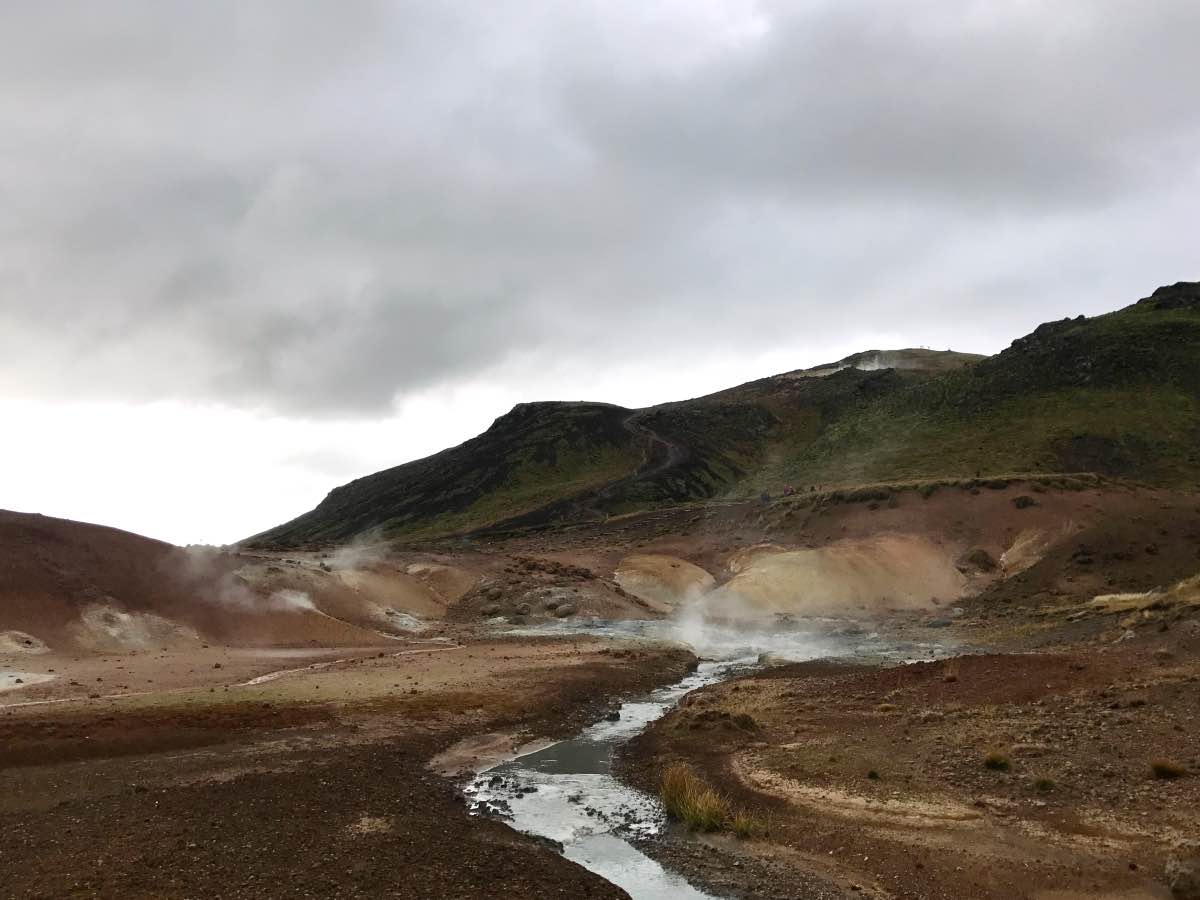
Natural Steam from volcanic activity
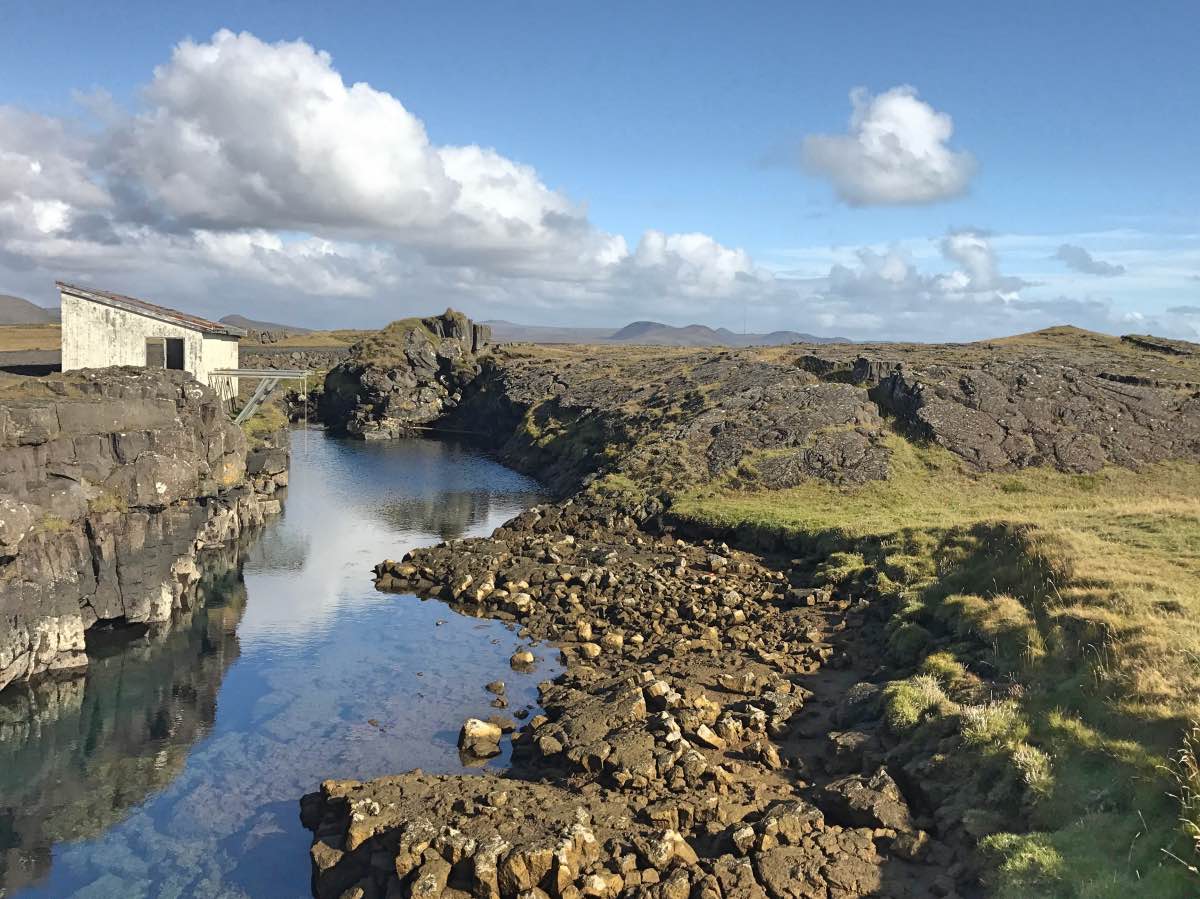
Bjarnargja, Iceland – not the easiest dive spot
For the dive at Silfra the next day, I was picked up at the bus station in town by our dive master, and we drove through rainy Iceland to get to Silfra. There, we meet up with the rest of the dive team as well as one more diver, who happened to be Norwegian. After a quick briefing in the car (because of the rain) we got geared up and headed to the dive site as the first group of the day. In the water we did a little tasting of the water, just to see how pure it is, before heading under the surface.
The cold shock you get the first time you submerge yourself in 4 degree (Centigrade) water is impossible to explain. However I soon got so distracted by everything there is to see that I quickly forgot about the cold. The water was unbelievably clear – they say visibility is between 100-150 meters, however there is no part of the crack that is this long so it is difficult to measure. We swam through and over what seemed like a labyrinth of cracks and rock formations, before ending the dive in the sandy lagoon.
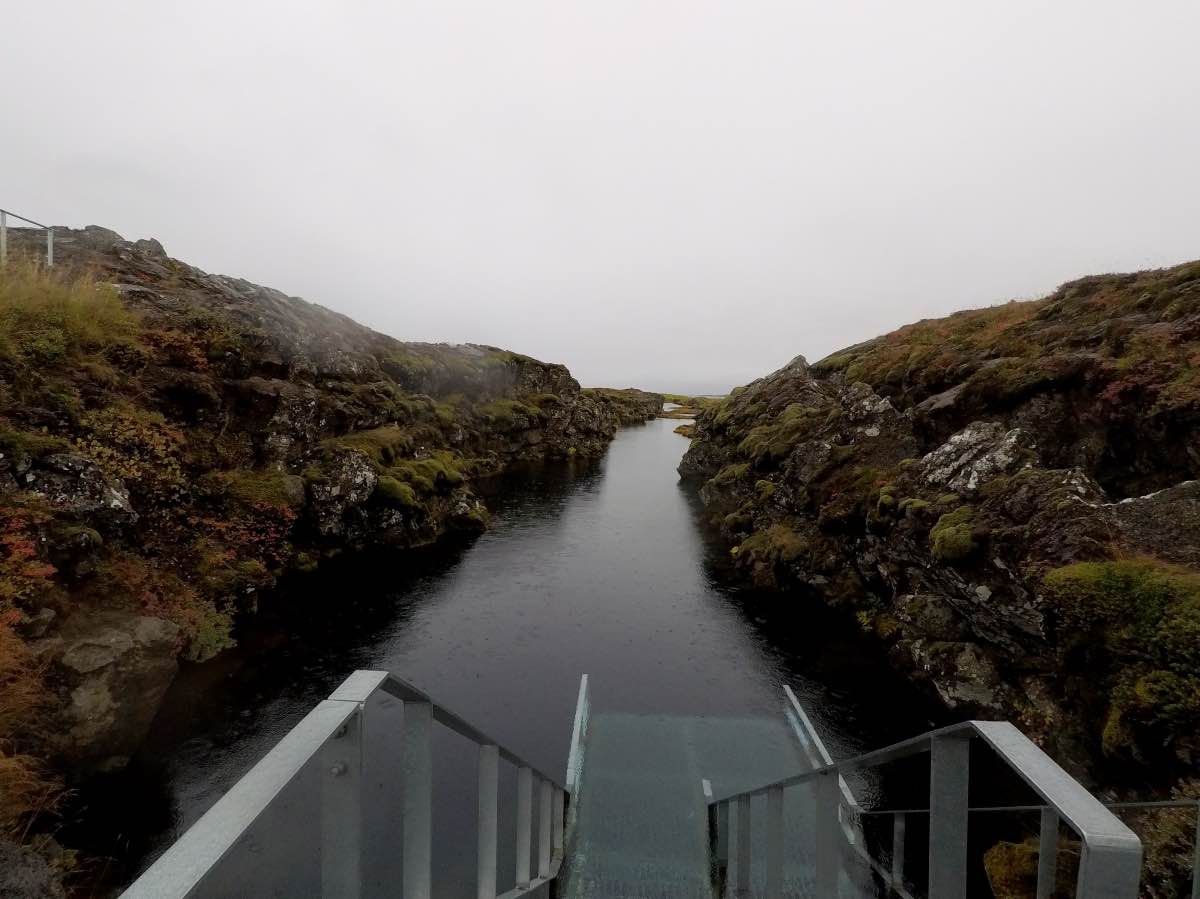
The Entrance to the dive site at Silfra, Iceland
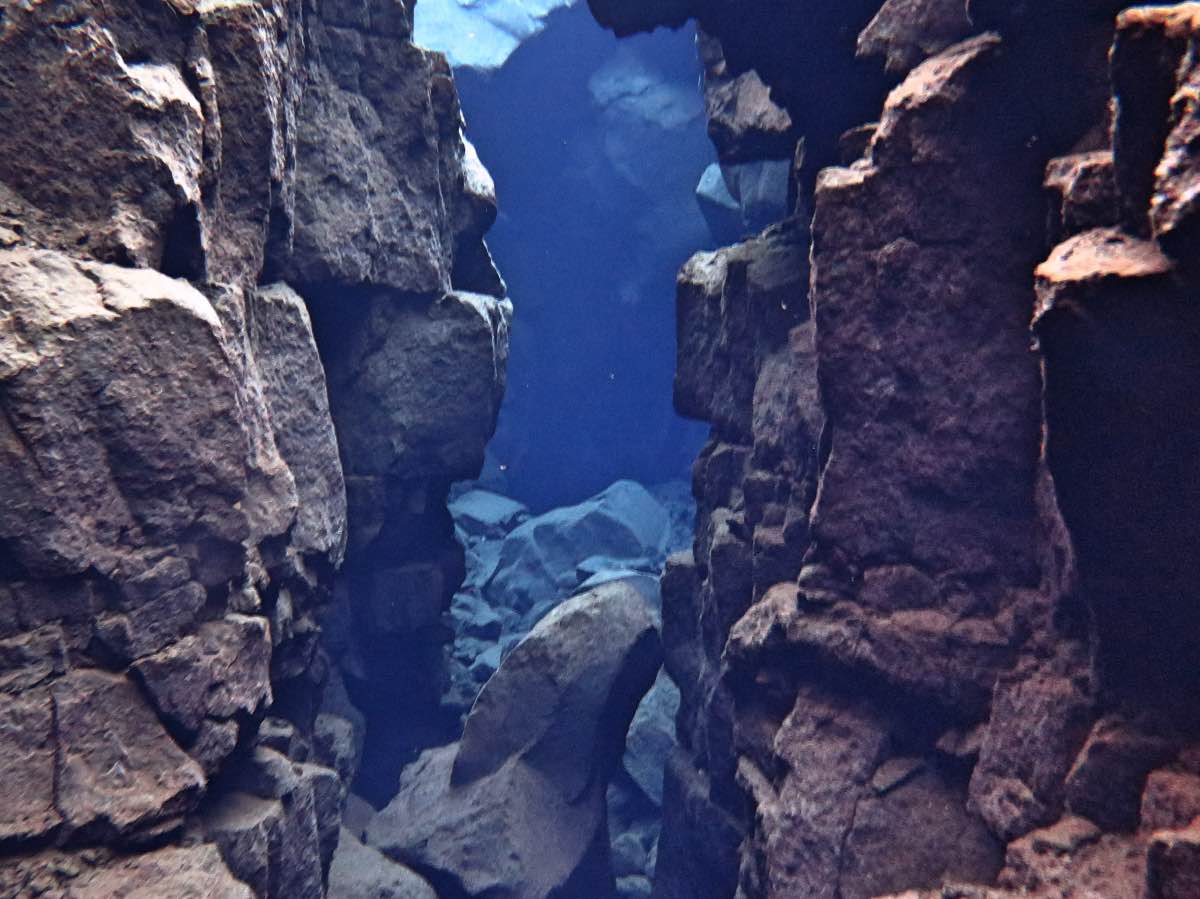
Silfra, Iceland – Incredible rock formations
After heading back to change tanks, and warm up with some hot chocolate, we went back for a second dive. We had to wait for a group of snorkelers to get ready and in to the water, and I am pretty sure some of them had never been snorkelling before. Back in the water we did more or less the same dive, but we passed by a more narrow rift towards the end. This dive, I felt I had better control of my buoyancy, especially in the shallower parts, and was able to enjoy my dive even more. The one bad part about doing two consecutive dives in cold water, and standing outside in the cold rain in-between, is that you get really cold at the end of the second dive – I could not feel my toes or the bottom half of my face.
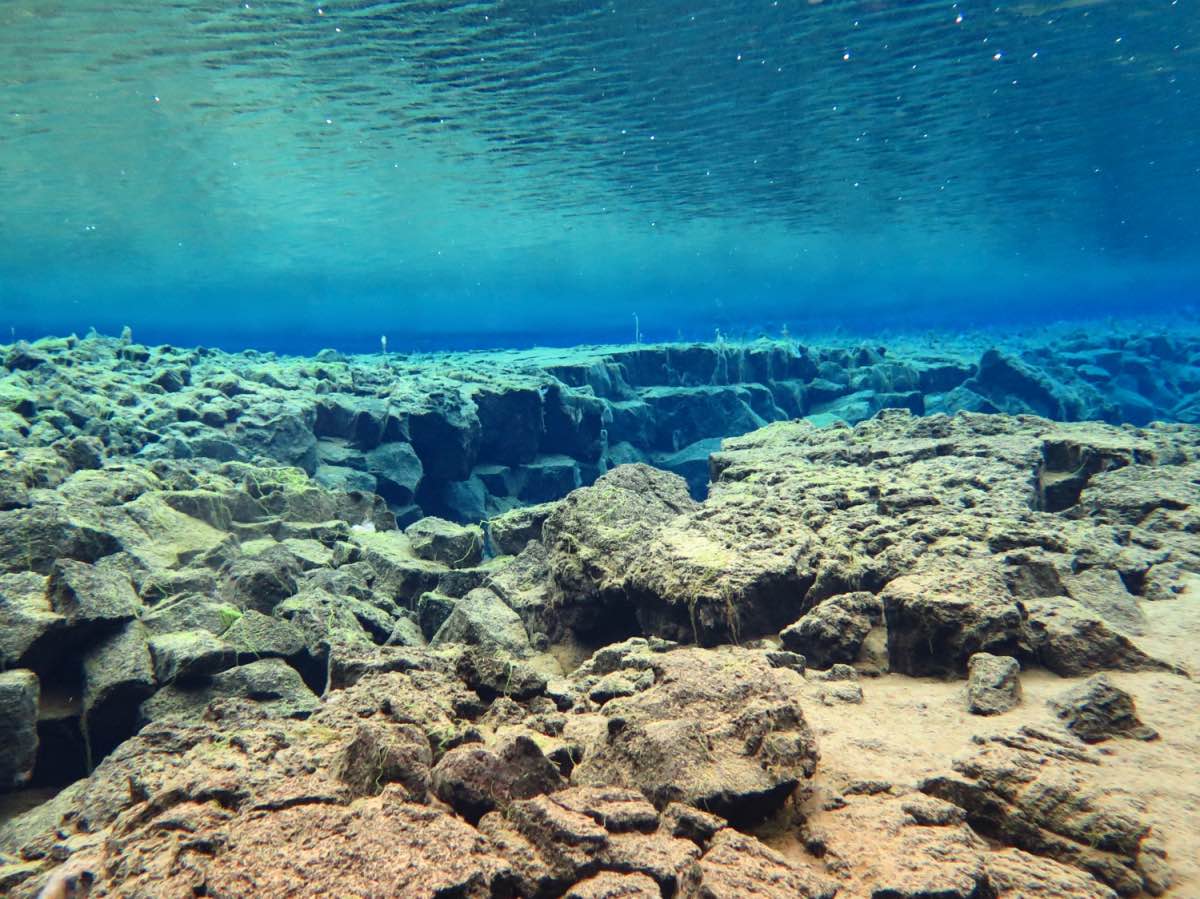
Silfra, Iceland – cold clear water
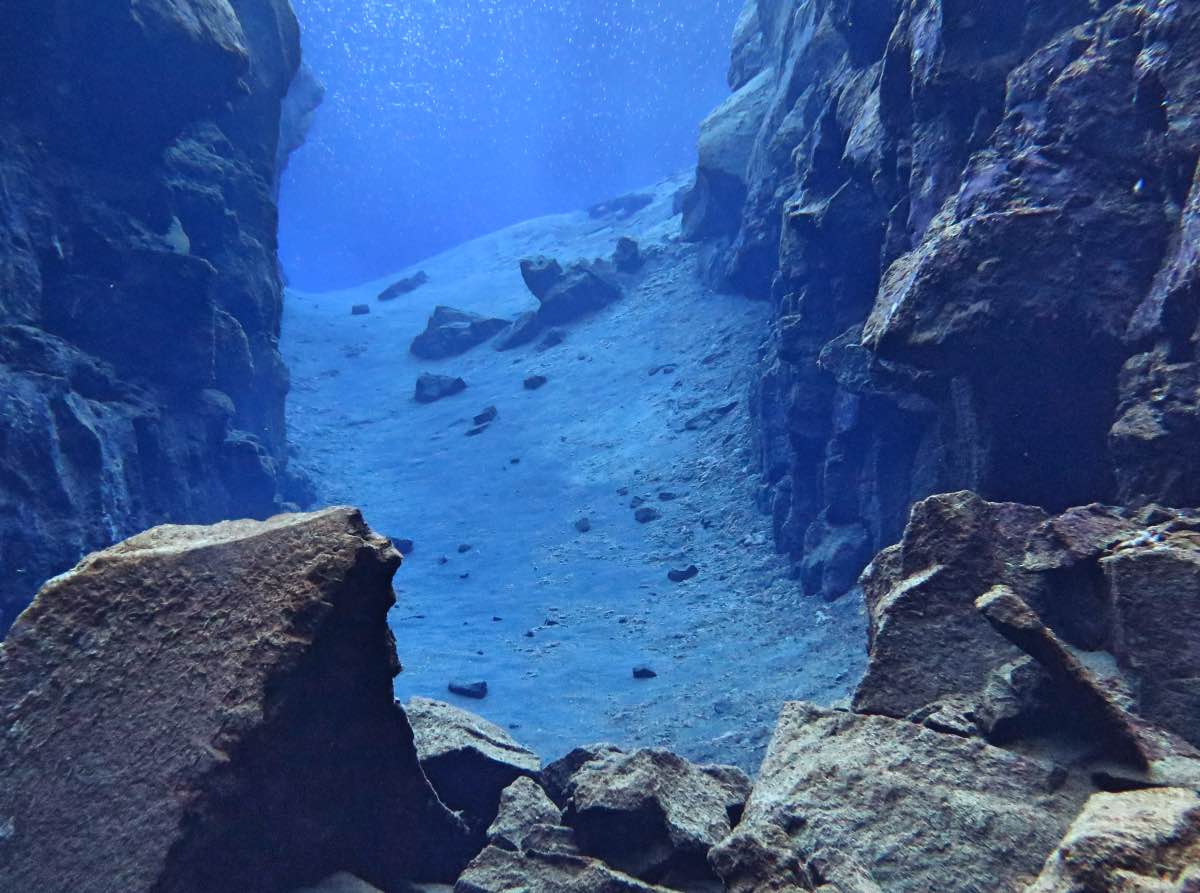
Entrance to the lagoon at Silfra, Iceland
This was most definitely one of the coolest things I have ever done! The dive team were great, and it is hard to beat the beauty of Iceland. While I still prefer my warm water diving, I am glad to have my dry suit certification, and excited about all the new dive sites that have opened up for me.
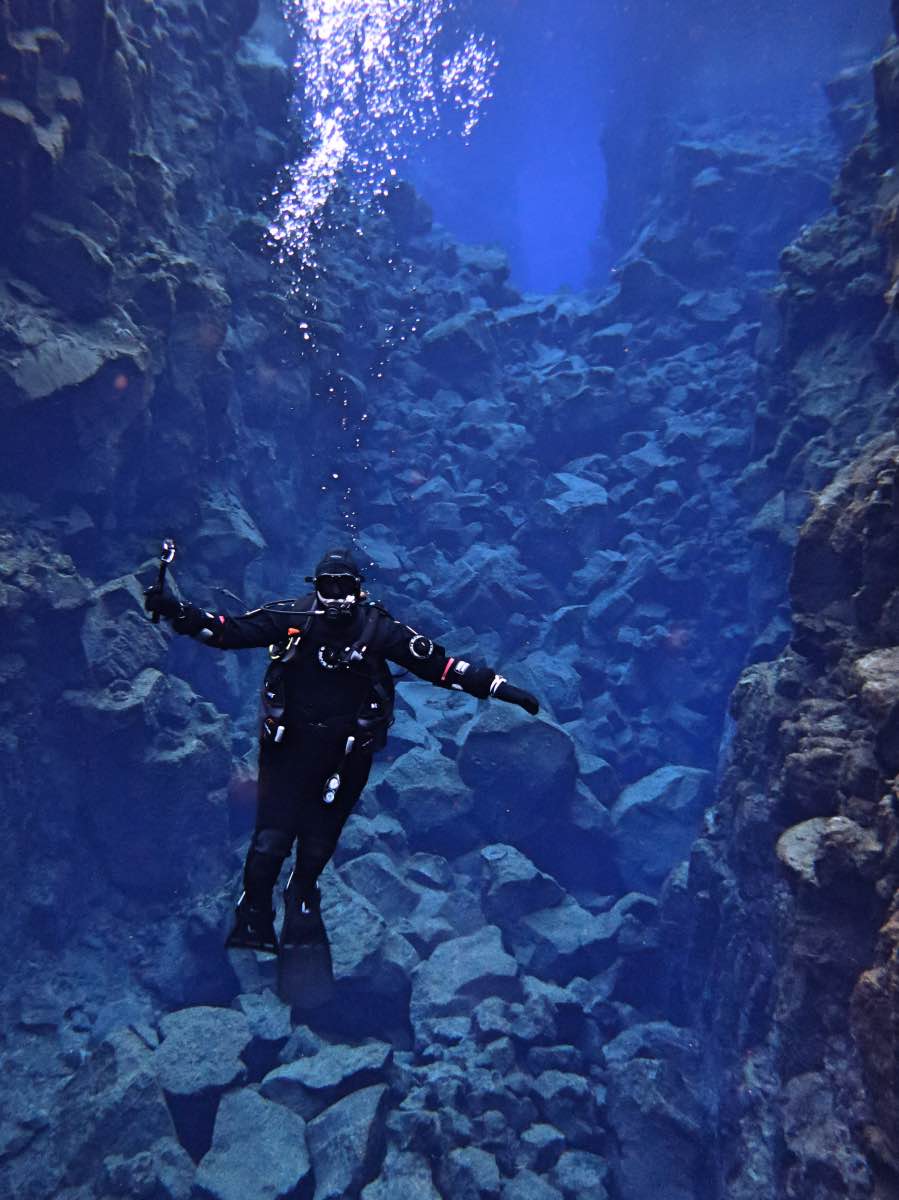
Coolest dive ever! – Thats me floating in front of some rocks at Silfra, Iceland
Recent Comments