

Spanning 77 km from the Pacific Ocean to the Caribbean Sea, the Panama Canal is a massive man-made waterway. The Panama Canal was built as a shortcut for ships so that they would not have to waste time sailing around South America, not to mention sailing past the notorious Cape Horn. Building started in 1881 by the French, however they soon stopped due to the high mortality rate of their workers. The United States took over in 1904, with better engineers and medical advances for malaria and yellow fever, they completed the Canal on August 15, 1914. The United States kept ownership of the Canal until 1999 when it was transferred to the Panamanian government.
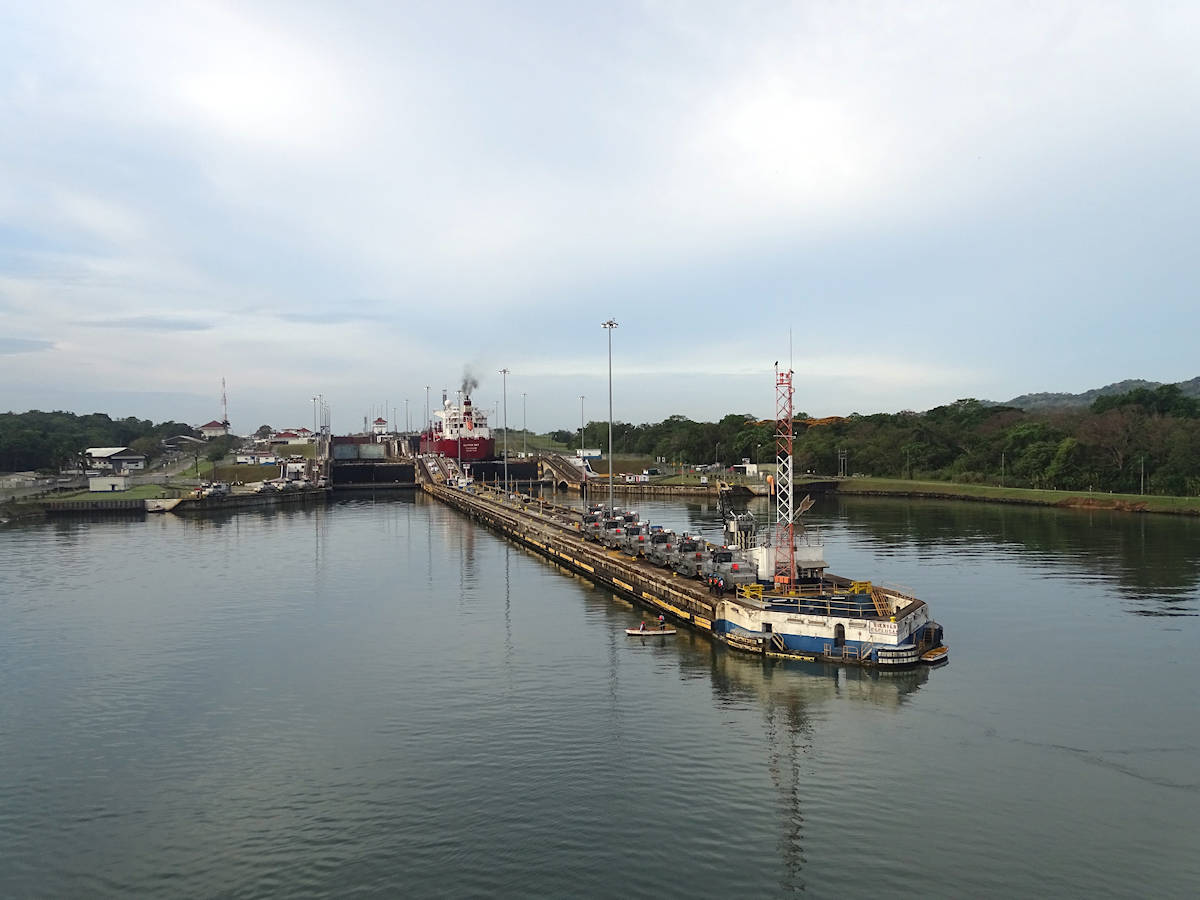
Entry to the Gatun locks
For me the Panama Canal always means waking up early to do all the paperwork – and then heading up on deck to see the arrival at the first locks. With the tranquillity and that beautiful early morning light, it is a very serene experience.
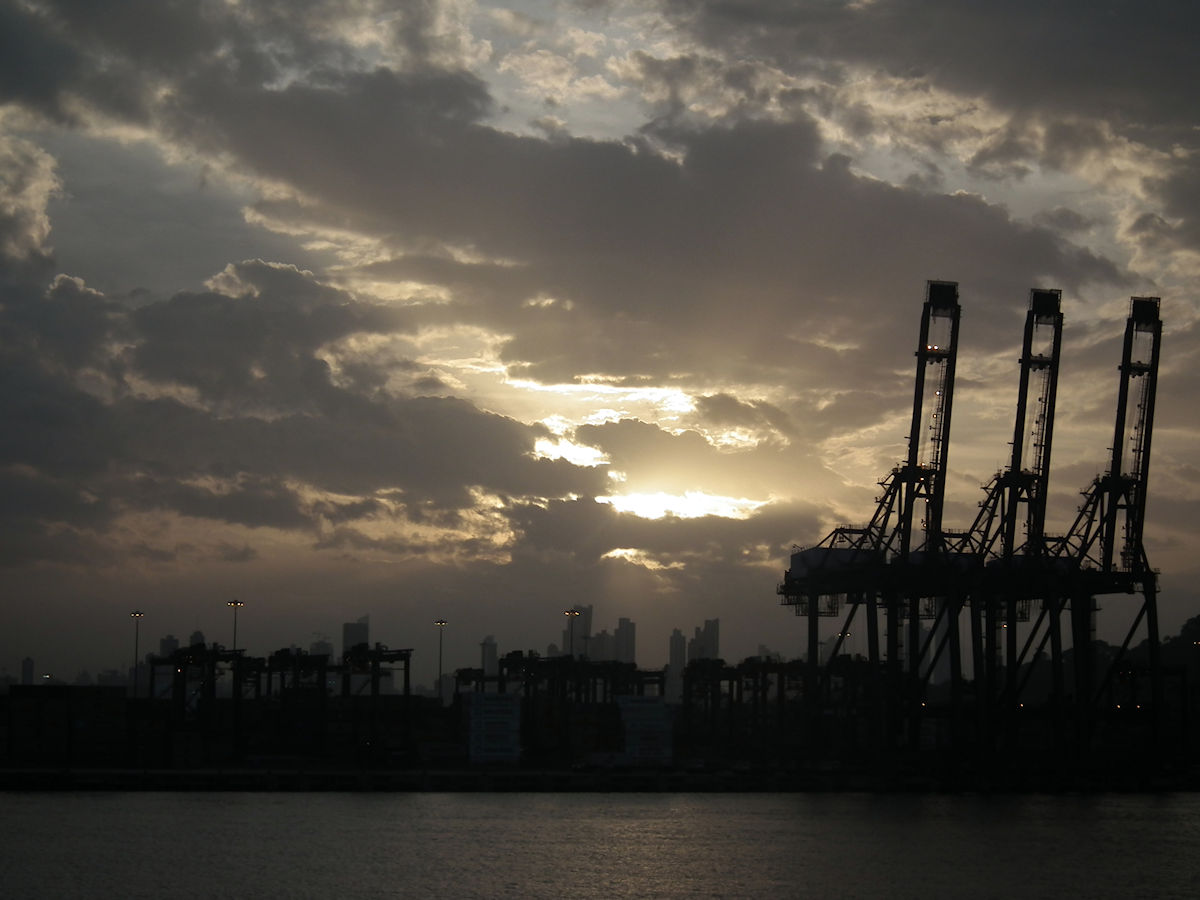
Early morning on the Pacific side
Coming from the Caribbean side we first went through the Gatun locks. There are three sets of locks lifting the ship almost 27 meters up to the Gatun Lake. As crew members, we are allowed all the way to the front of the open deck. From here you really get a feel of the movement of the ship up and down the locks, and how fast it really goes. I love standing on deck watching the people ashore, there is always some ongoing maintenance. At the entrance to each lock system, using the techniques from the old days, two men are always send out in a small rowboat to connect the lines between the ship and the electric mules.
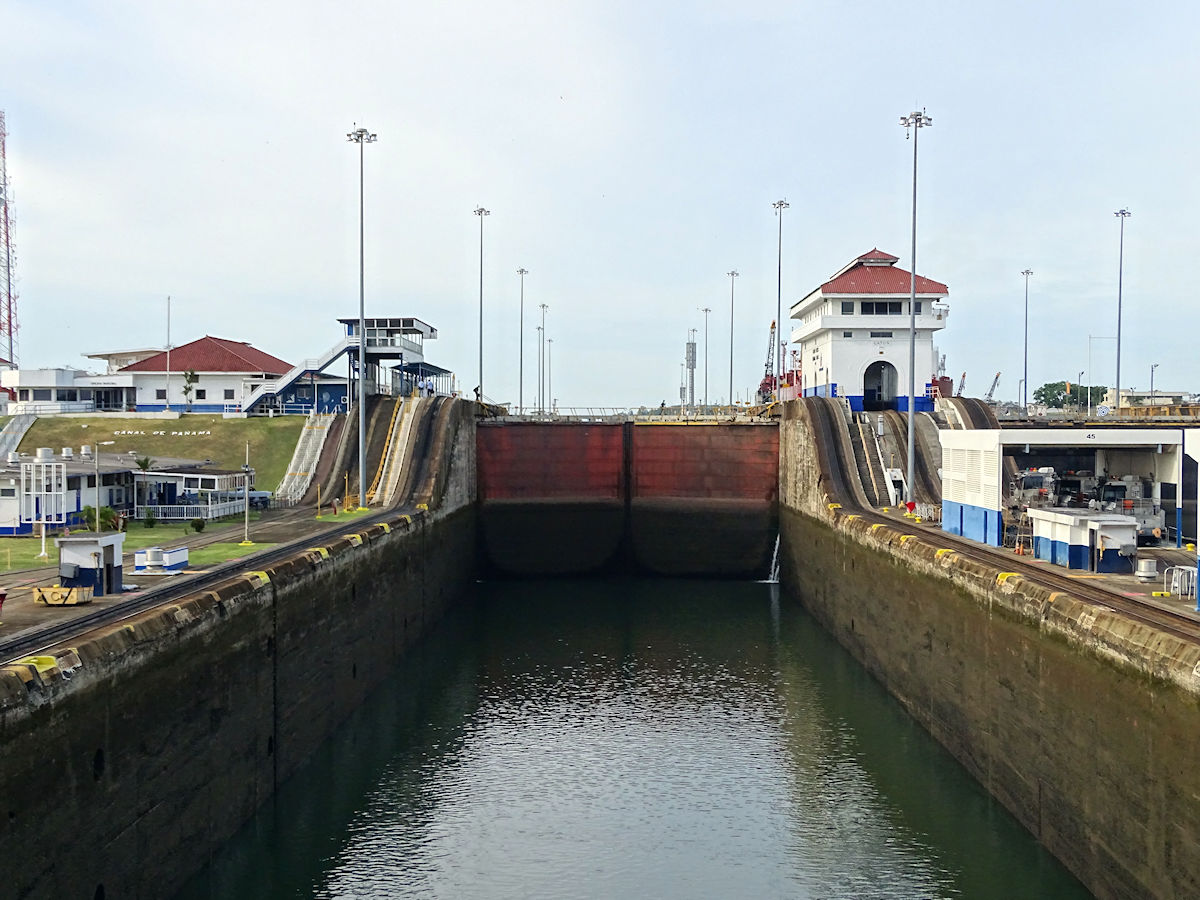
Gatun locks
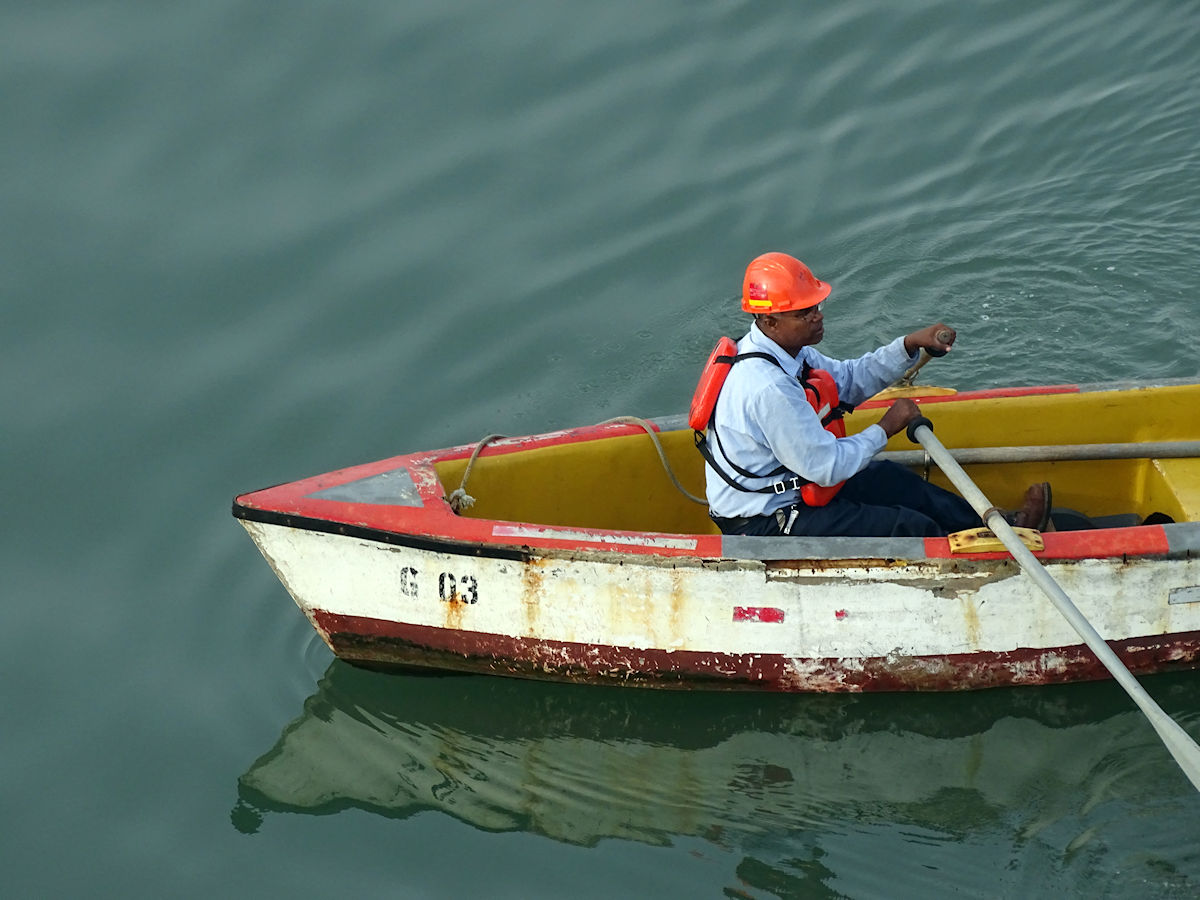
Row row your boat
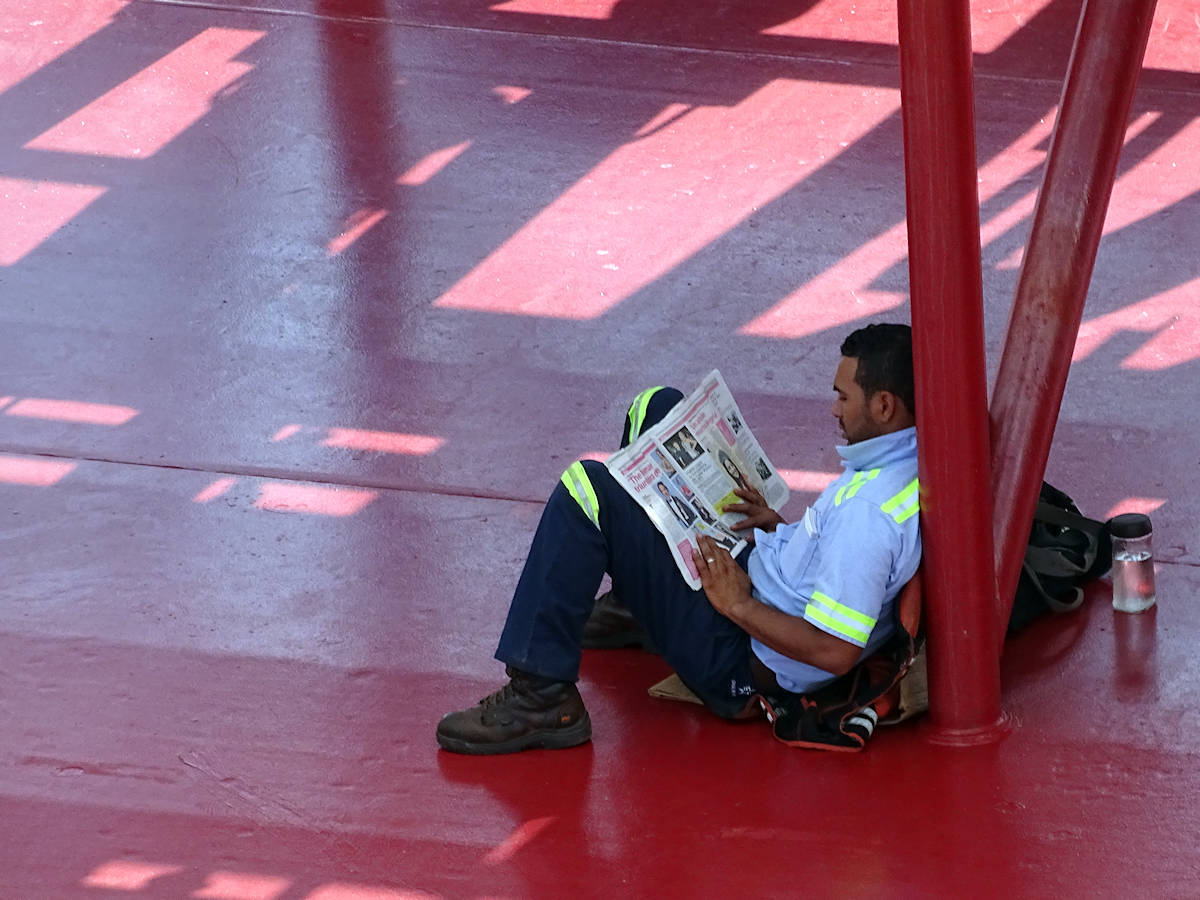
Time for a rest
Next up is the long crossing of the Gatun Lake, which takes several hours. Before arriving at the Pedro Miguel locks you pass through the Culebra Cut. This is a very narrow passage, which was dug out from the surrounding terrain and flooded.
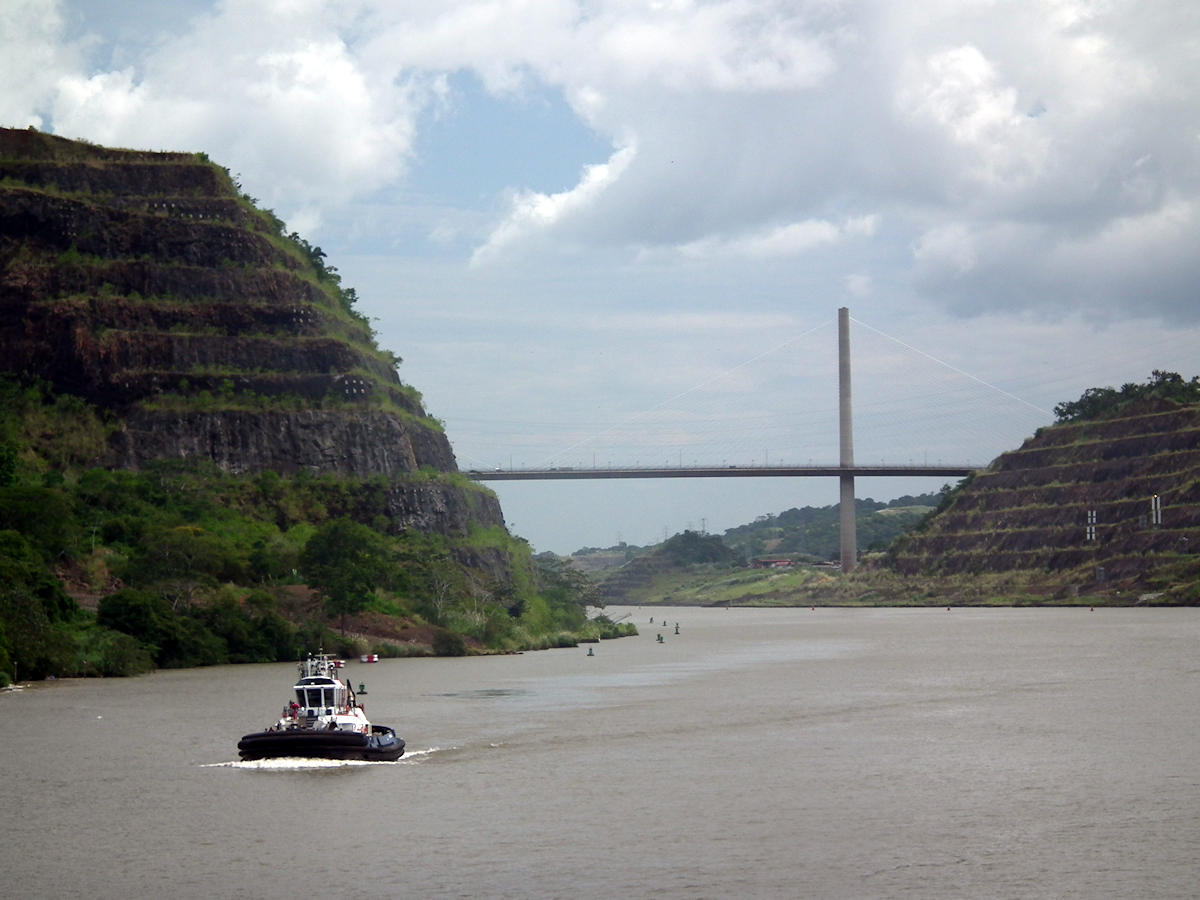
Culebra Cut
The smallest set of locks is the Pedro Miguel locks where one lock will lower the ship by almost 10m. You can even see this set of locks from the Culebra Cut, and as you sail through you can see the next set of locks further ahead. This time when we went through the Pedro Miguel locks, we saw another ship approaching in the opposite direction. It was very interesting to see how a small tugboat, and a small rowboat with two people, manage to direct this massive ship into a set of locks almost the same width.
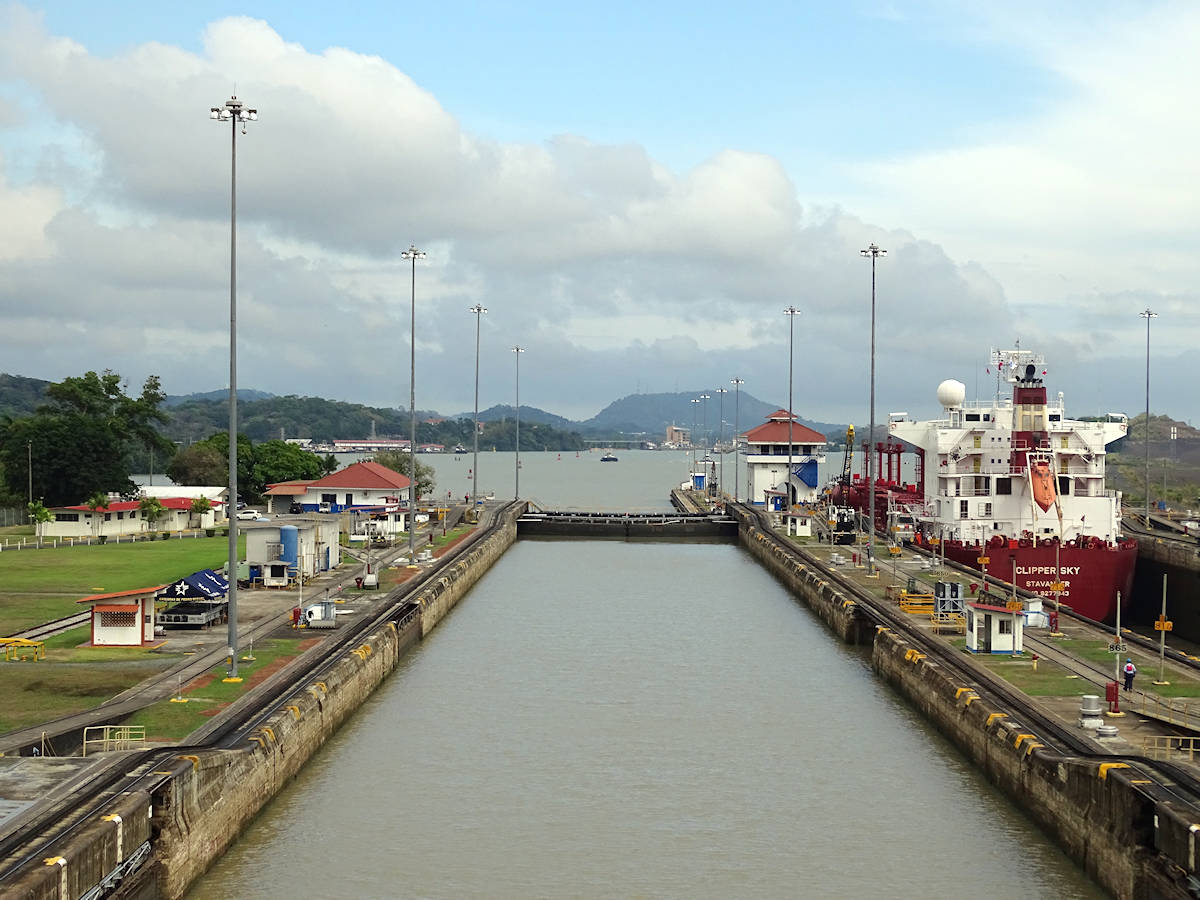
Pedro Miguel locks
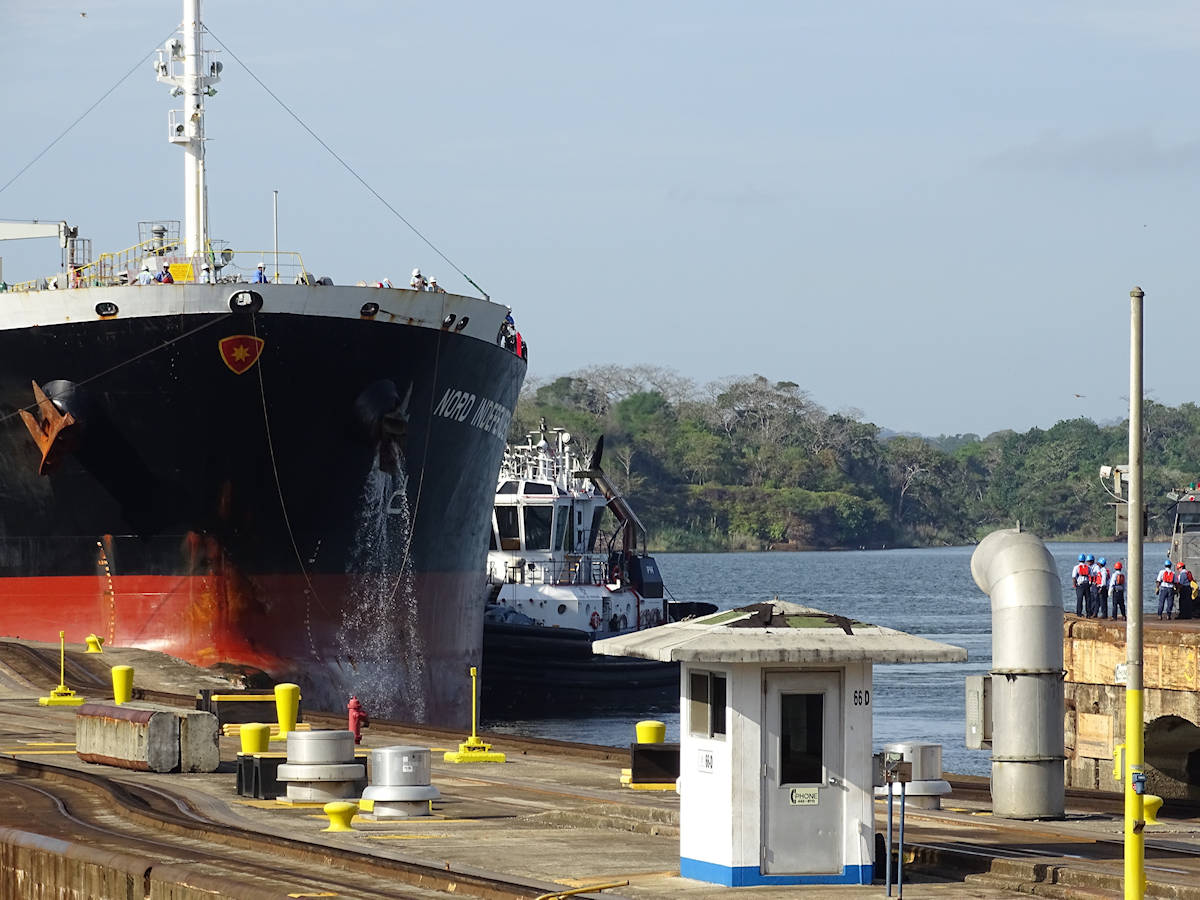
Ship being navigated into the locks
Finally we arrived at the Miraflores locks, closest to the Pacific side. Again there are several locks and ships are being lowered 16.5 m. As you go through these locks you can see the high risers of Panama City behind the mountains as well as the Bridge of the Americas, one of 4 non-swinging bridges connecting the North and South American land masses. Here there is also a visitors center, and seats where people can watch the ships transiting through the canal, however this was empty this time around. Through the locks we were headed around the corner to Panama City.
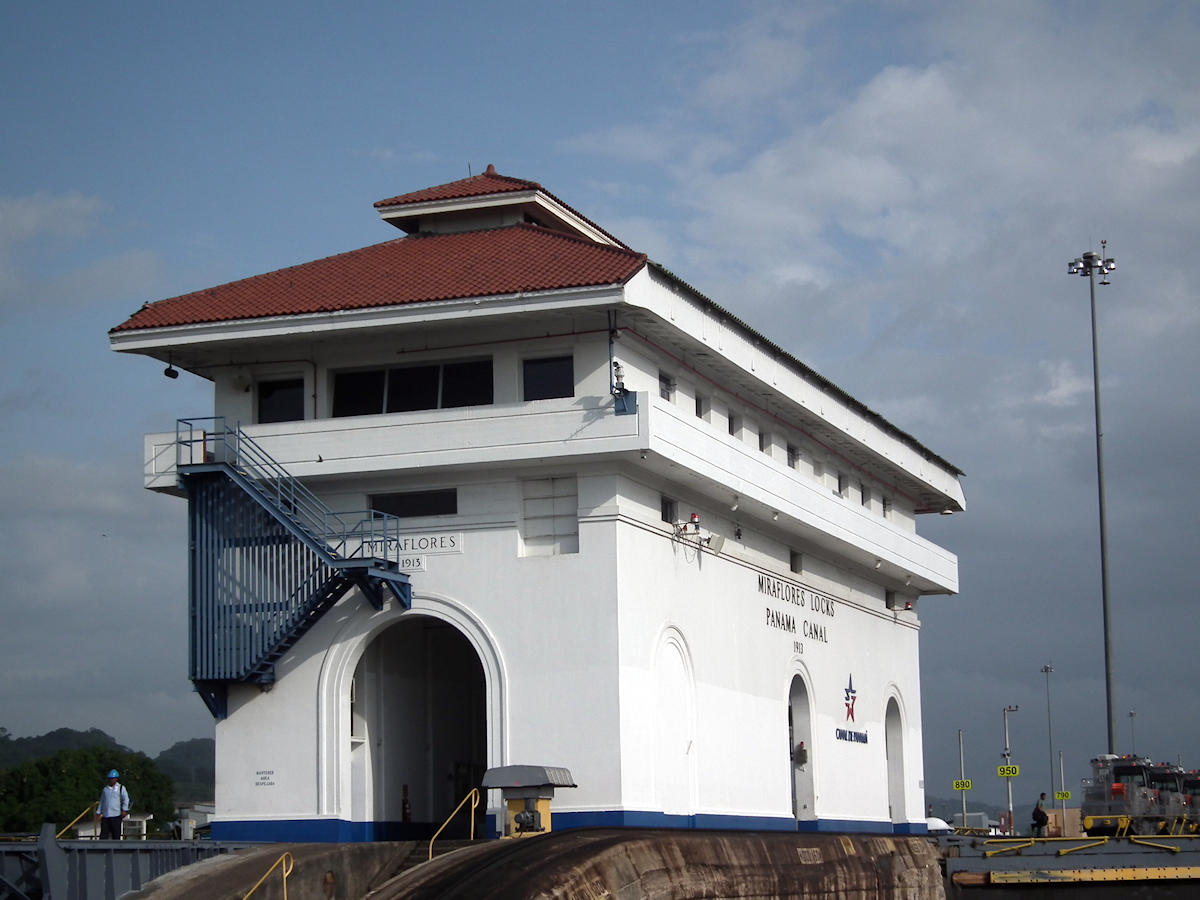
Miraflores locks
I think Panama Canal transits are something I will never get tired of. I love to see the differences from transit to transit, and see how the people work shore side, often using techniques as old as the canal itself. It truly is a special and impressive place.
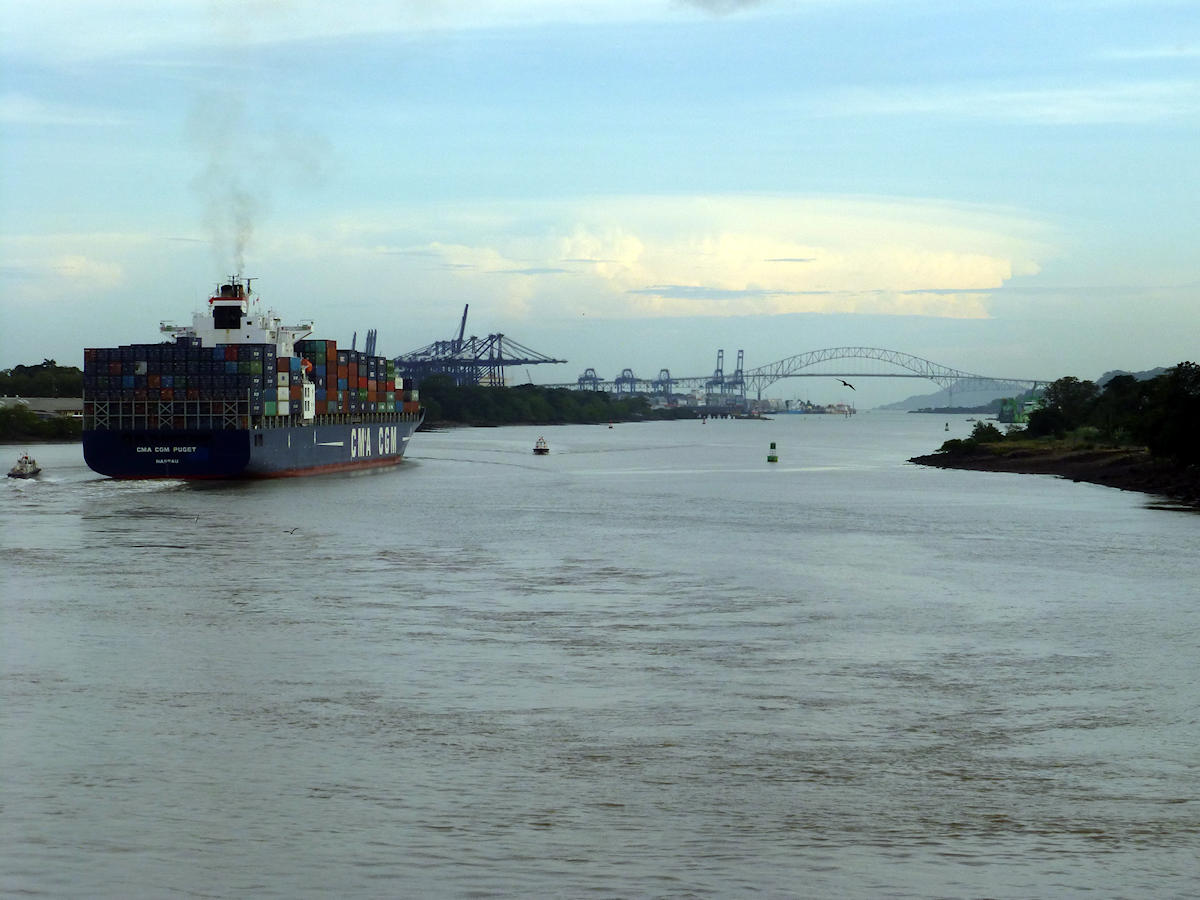
Bridge of the Americas
Recent Comments